Holding and Participation Structures: Goals Before Entities
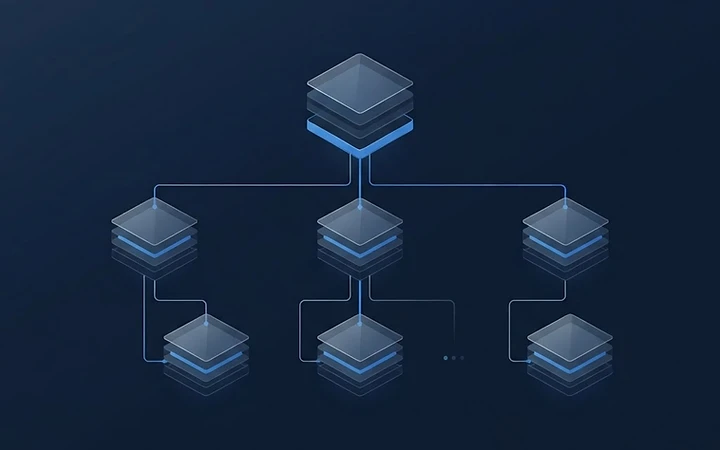
Three business areas, two partners: a hypothetical example
Imagine three business areas: an existing operating business, a newer service unit, and a planned participation in a third activity. Two partners manage the whole. Such constellations often arise, frequently having grown over years and rarely being fully planned.
This example is fictional. It does not represent a specific client case. It serves only to highlight the questions that should be addressed when dealing with multiple activities and shareholdings.
Goals before entities
Those establishing a holding or participation structure should first clarify the objective. The structure must follow the plan, not the other way around. A holding company is not a status symbol. It is a tool that must serve a specific entrepreneurial purpose.
Potential goals:
- Separation of activities: Each business area receives its own entity to cleanly separate risks.
- Joint management: Multiple participations are brought under one roof to enable unified leadership.
- Involvement of third parties: A partner should enter a single activity without affecting the other fields.
- Preparation for changes: Future transfers, divisions, or strategic realignments should be organisationally prepared.
None of these goals automatically require a holding company. Some things can be managed without new companies; some require them. The decision depends on the project, not a template.
Participants and their roles
Planning includes the question of who is involved:
- Who holds shares, and in which company?
- Who holds operational leadership, who handles strategy?
- Where do new partner roles emerge, and where do existing shareholders remain unaffected?
Roles are not static. A partner who leads operationally today may wish to shift to a strategic role later. A participation that is small today may grow later. The structure should anticipate these possibilities without pre-empting every future development.
Potential future changes
Planning a structure means planning against an open future. Therefore, it is worth asking which changes are likely:
- Should an activity be able to grow independently later?
- Is a sale or partial exit pending?
- Will a new business area be added that does not fit into the existing structure?
No structure solves every future issue. A good structure does not exclude the most common changes. It does not force a reorganisation as soon as circumstances change slightly.
Organisational requirements
Beyond corporate law issues, organisational ones remain:
- How are decisions between participations coordinated?
- Who has the power of signature, and in which company?
- How are shared services and costs allocated?
These questions cannot be solved by a holding construction alone. They require clear agreements, a clean separation of competencies, and documented allocation.
Swiss AG in a participation structure: a use case for AG Ready
AG Ready also considers projects where a Swiss AG is to be integrated into a holding or participation structure. Our services include the preparation of the company structure and organisational support within the scope of the agreed services.
Important: AG Ready does not promise automatic tax savings or blanket protective effects. Those who build a holding company based solely on such expectations are missing the actual point. A structure that does not serve the intended project is not an asset, but a cost.
Five questions before the decision
Those evaluating a holding or participation structure should first answer the following questions:
- What goal should the structure actually achieve?
- Which activities should belong together, and which should be deliberately kept separate?
- Which participants should enter or withdraw, and where?
- Which future changes would I like to keep open?
- What organisational requirements arise from this?
Next step
If you are evaluating whether and how a Swiss AG should be integrated into a holding or participation structure, please arrange an initial consultation at ag-ready.ch.

